
A State-of-the-Art Facility Meets a Barrier No One Wants to Name
I met Dr. DeMetris Reed, Jr., Director of 1787 Butchery, inside the stainless-steel butchery lab at VTSU–Randolph, a space so cold the motion sensors barely registered us. Within minutes, I had to ask if we could step out and talk somewhere warmer. The air had the same still, biting cold I remembered from early-morning ice fishing with my father as a kid in Maine. Reed didn’t seem to notice.
He moved through the room with the calm familiarity of someone who has spent years in environments like this — chilled floors, metal tables, the hum of machinery. I couldn’t shake the realization, even later as I wrote this blog post, that we couldn't both be comfortable in the space — a small echo of the larger tension surrounding the facility itself, built to answer a statewide call for more butchers yet somehow still sitting at a distance from the very people it was meant to serve. We spoke for more than an hour, and here’s what it revealed.
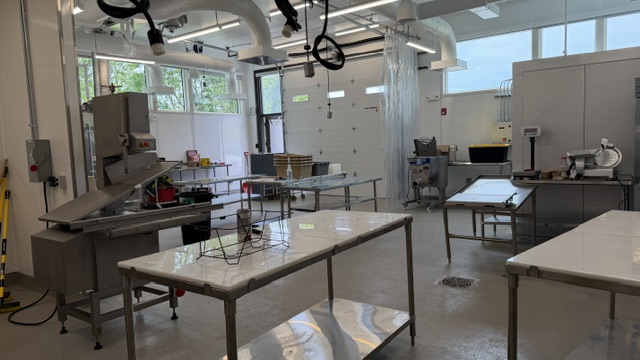
(Inside 1787 Butchery, a state-of-the-art educational butchery facility on the VTSU-Randolph campus)
A Texan finds home in Vermont
Reed grew up in Texas cattle country, where land, livestock, and family form the backbone of daily life. “I’m a cattleman. I’m a Texas cowboy,” he said with a laugh. “I love the cattle. I want land.” His story goes way back. His father, Demetris Reed Sr., bought him the smoker he still uses today — a red trailer named Senior that he hauls to farmers markets across the state. “He bought it for me for graduation in high school and helped me remodel it… she’s my offset smoker that I love to drive around.”
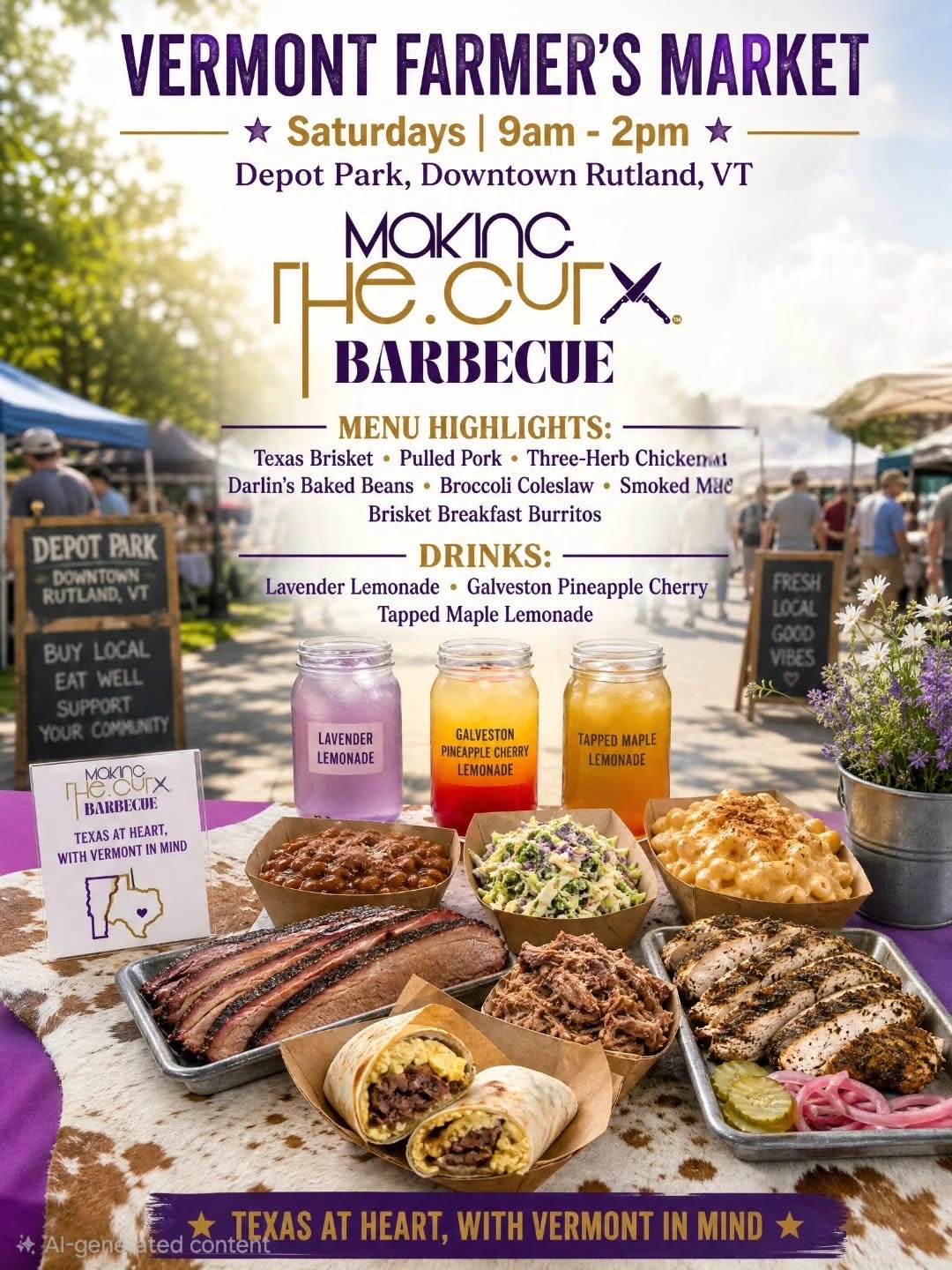 He and his wife launched Making The CuTX barbecue during COVID, starting in the Northeast Kingdom before finding a strong following in Rutland County. He cooks the way he was raised, Texas style, hardwood smoke, long hours, no shortcuts. “I try to honor my roots of Texas-style BBQ,” he said. His family is deeply involved, from his mother-in-law, who spends summers helping, to his parents, who travel north for a month at a time. “We have a very good, supportive group in our family.”
Vermont, he says, has a way of holding on to you. “It’s [like a] small Texas town, but it’s the state of Vermont,” he said. “They make it hard to leave.”
A butchery program takes shape
When Reed arrived at what was then Vermont Technical College, the plan was to build a two-year associate degree in butchery and meat science. But the merger into VTSU, shifting leadership, and the need for institutional stability changed the path. “Faculty just didn’t see the value of agriculture coming back,” he said. “And when you’re dealing with a merger… you just want stability before you start changes.”
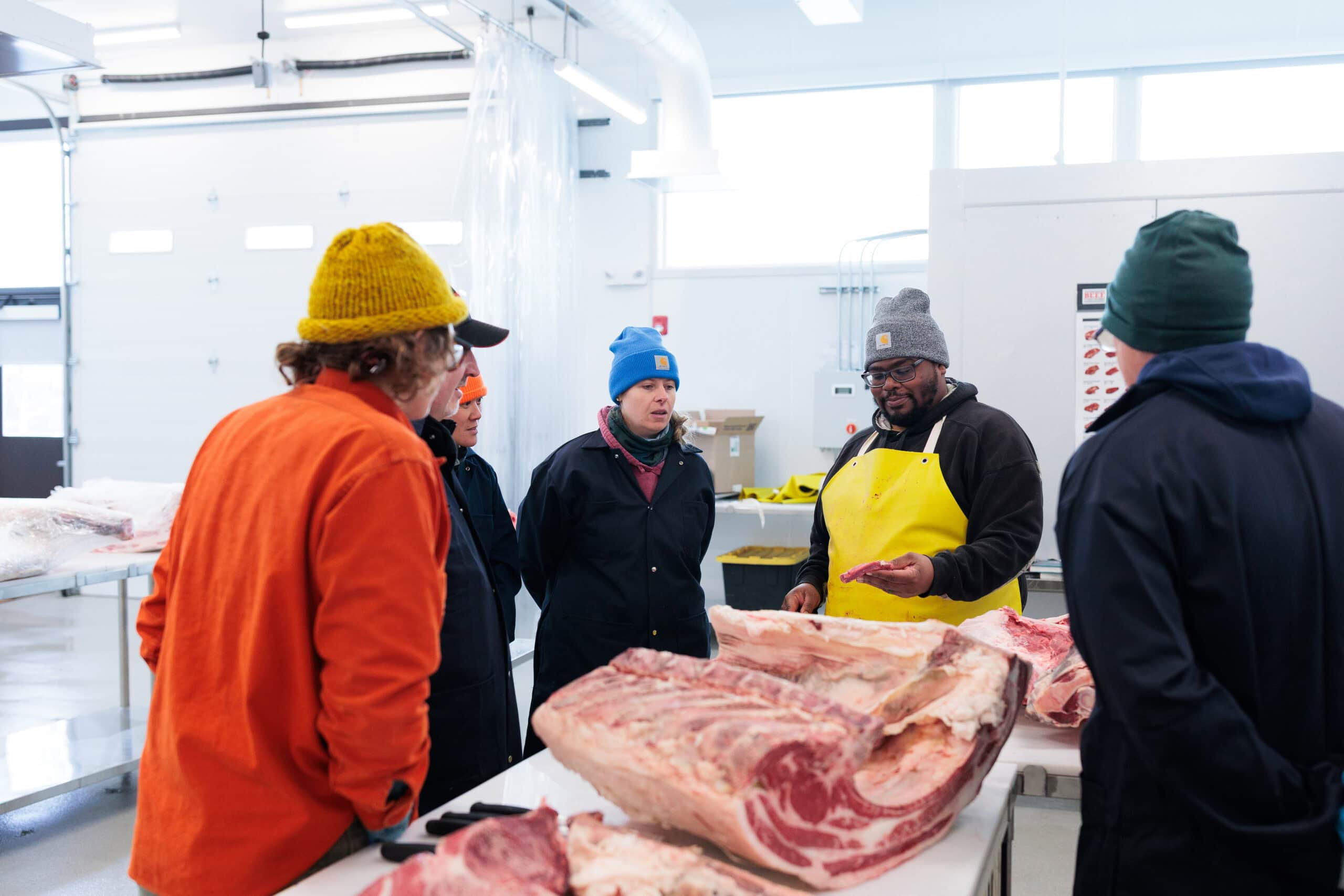 So Reed and his colleagues pivoted. The result is a three-level certificate program in Butchery Arts, launching this fall — a program designed to be intensive, affordable, and immediately useful to the industry. “The idea was making it affordable and putting more people into the industry as quick as possible,” he said. “History is great, English is great, but if you can take some business classes and take the certificate program, then I think that would be better off for butcheries like Wallingford Locker.”
The cost, however, remains a real consideration for many prospective students. According to Dr. Glenn Evans, Executive Director of VTSU's Center for Agriculture, Food, and Forest Entrepreneurship (CAFFE), Level One of the program (13 credits) is about $5,200, Level Two (23 credits) is roughly $9,200, and Level Three (30 credits) is around $12,000. He emphasizes that, compared to the price of an associate's or bachelor's degree, these certificate costs are "small potatoes," and that the university is actively exploring VSAC and other state and federal funding eligibility, along with new scholarships, to reduce financial barriers.
From Reed’s vantage point inside the lab, though, the picture looks different. For many would-be butchers — the very people Vermont needs — even a lower-cost certificate program can feel out of reach. “We actually put student work money in the grass-fed beef grant,” he said. “They get a check. They do 20 hours in here cutting up.” It helps, but it doesn’t fully resolve the tension he encounters daily: the training exists, but access to it remains uneven.
Evans adds that cost may not be the primary barrier at all — the larger hurdle is getting high-school students and other potential entrants to see themselves as butchers in the first place, stepping into a unique, demanding, and deeply needed career path. His perspective reframes the issue; he's confident the challenge isn’t the program, but that too few young people imagine butchery as a viable, skilled, and meaningful career.
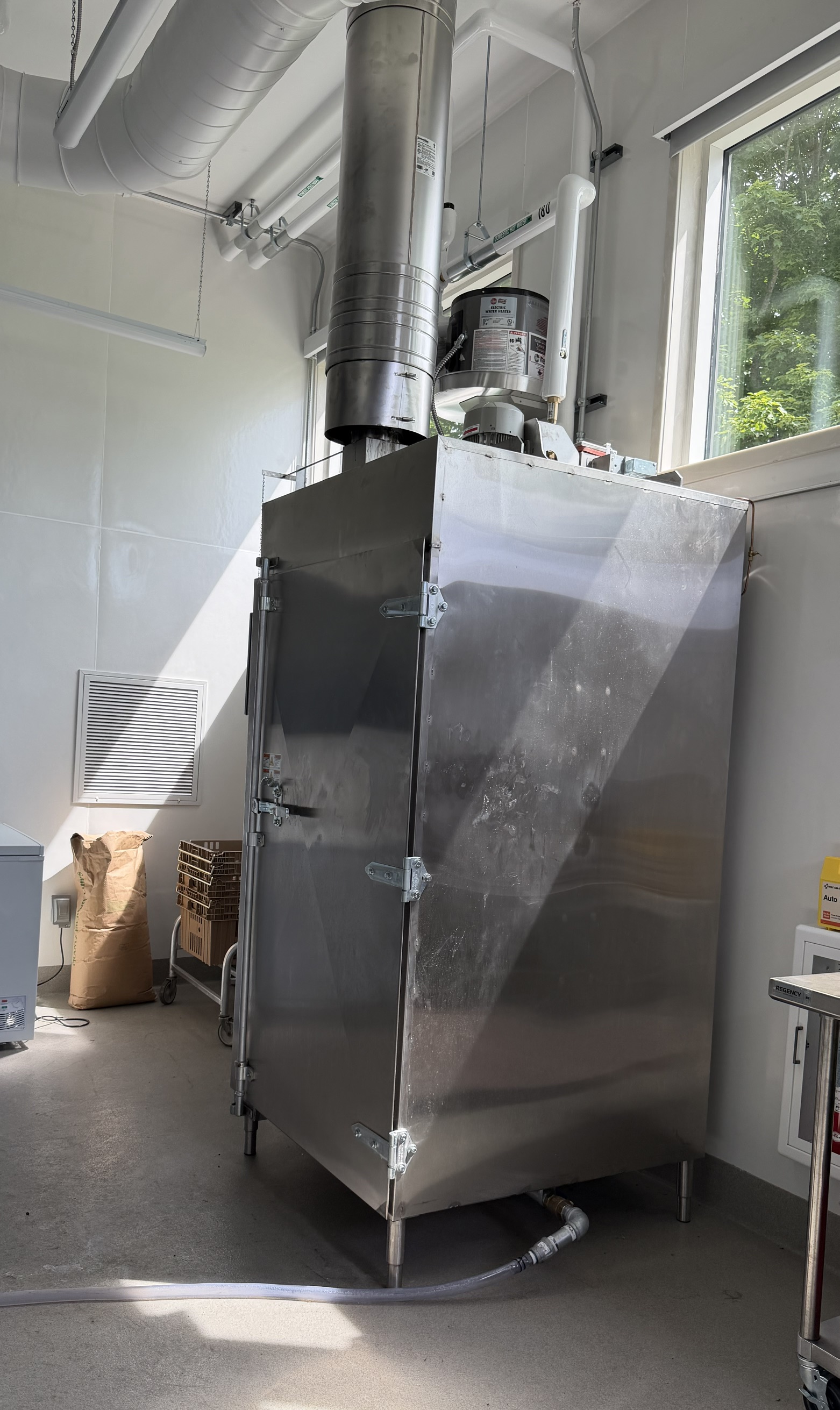 The facility itself is state-of-the-art: a smokehouse that can drop from 135 degrees to 70 in three minutes, a walk-in cooler, a band saw, grinding equipment, and a top-of-the-line camera system for remote instruction. Reed sees it not as a classroom but as a working environment. “This is a learning space,” he said. “Don’t let class get in the way of your education.”
He is clear about the mission; this is not a commercial processor. It is a teaching facility designed to strengthen Vermont’s workforce and support local producers — not compete with them. “Our mission is to put more workers into your facility,” he said. “We’re not in the business of taking your farmers and producers from you.”
He is equally blunt about the realities of the work. It is physically demanding, technically complex, and deserving of real wages. “This is not a minimum wage industry,” he said. “You’re standing on your feet in the cold concrete, hauling 500-pound sides. It is a backbreaking laborer’s job.”
The U.S. Bureau of Labor Statistics reports that butchers earn a median annual wage of $38,960. In VT, that number is closer to $46,384.
Transparency, he believes, is essential. “If you want to watch us break it down, you’re more than welcome,” he said. “That is what the issue with the meat industry started off with — we weren’t transparent enough.”
He speaks just as forcefully about the ethics of slaughter. A captive bolt — the metal rod in a handheld stunbolt pistol used to render cattle and sheep instantly unconscious before slaughter — is central to that process. “When we do cattle bolt for cattle and lambs… it has been scientifically proven to improve meat quality and reduce pain and suffering in the animal,” he said. “We process them as quickly as possible without suffering.”
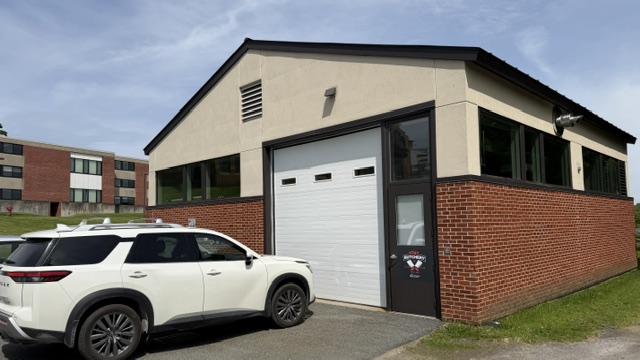
(Outside 1787 Butchery, a state-of-the-art educational butchery facility on the VTSU-Randolph campus)
Where Vermont’s food future could go
Reed sees enormous potential for VTSU–Randolph to become a hub for Vermont’s evolving food system, but he’s also aware of the contradiction; the state built a facility to address a workforce shortage, and now it sits half-idle because the workforce can’t afford to be trained. It’s the same tension we felt talking in that freezing room — the infrastructure is here, polished and ready, but the human element hasn’t been able to meet it.
The state has heard for years that farmers need more processing capacity. Now the training is here — the equipment, the expertise, the curriculum — yet the pipeline remains thin. “The state does need a commercial processing facility that could handle more of the actual quantity,” he said. “There is no other processing facility here in the state to do sausage, smoked meats, dry-aged sausage.” The irony is hard to miss; Vermont finally has a place to teach the next generation of butchers, but the next generation can’t afford to show up.
 Reed believes Vermont producers could thrive by tapping into nearby urban markets — Boston, New York, Albany — while keeping food affordable at home. “Take 40 percent to a higher market area and keep the other 60 percent here,” he said. “You offset the price without raising it on local families.” It’s a practical vision, one that depends on a trained workforce that doesn’t yet exist at the scale the state needs.
Reed also sees the program as a bridge between generations. Vermont’s average farmer is nearly 70. “My dream is a younger producer coming in… while the older demographic is still being used for their knowledge,” he said. “A shift where neither one goes into financial debt.” But that dream hinges on access — on whether young people can afford to enter the field at all.
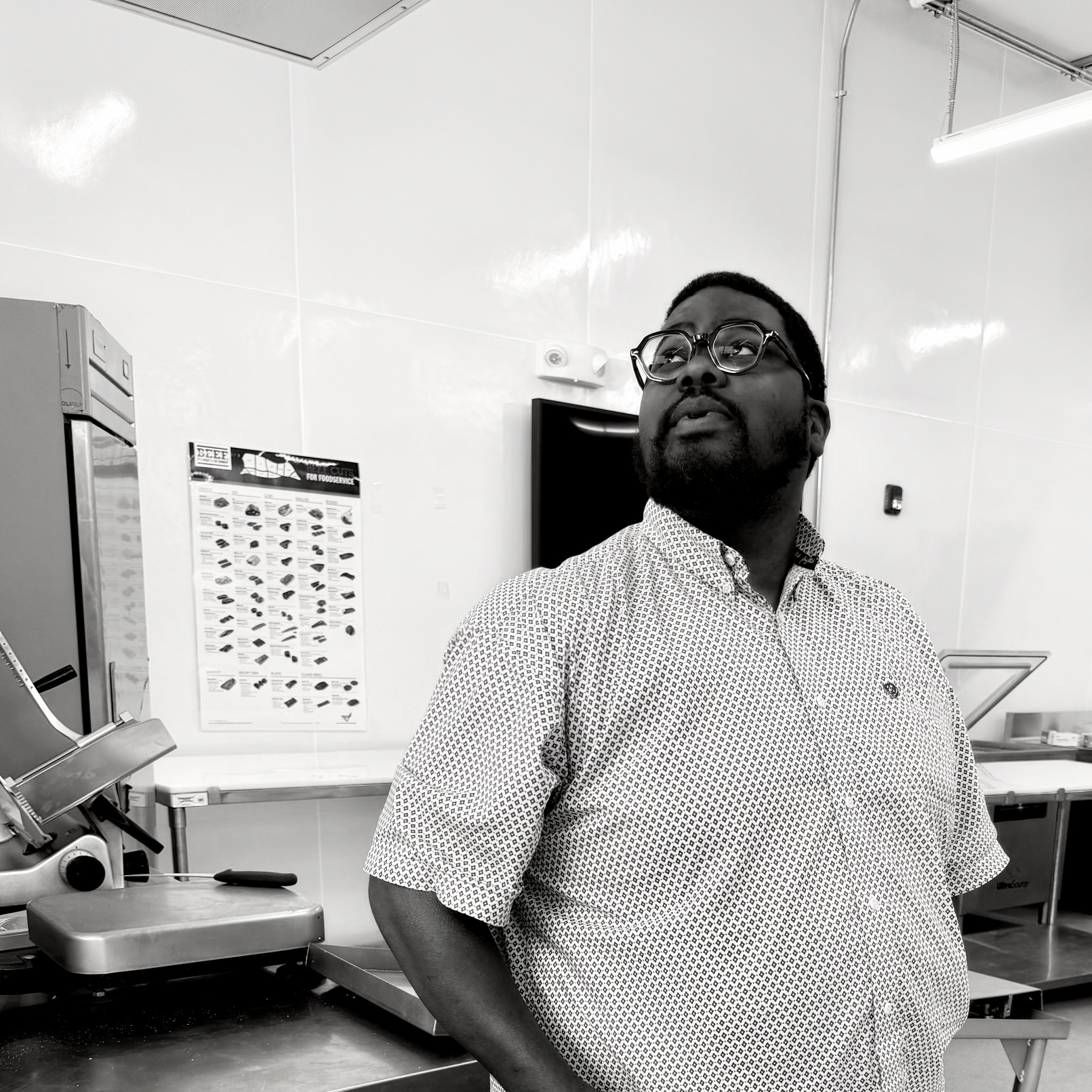
When I asked him what a perfect world looks like, he looked up at the ceiling for a moment, considering the question, then answered. “Financial stability — for myself, my colleagues, and for our students. Scholarships. Partnerships. Internships. A community that sees the value of this place.” It’s a vision vested not in expansion, but in alignment — a system where the training, the need, and the people finally meet in the same room.
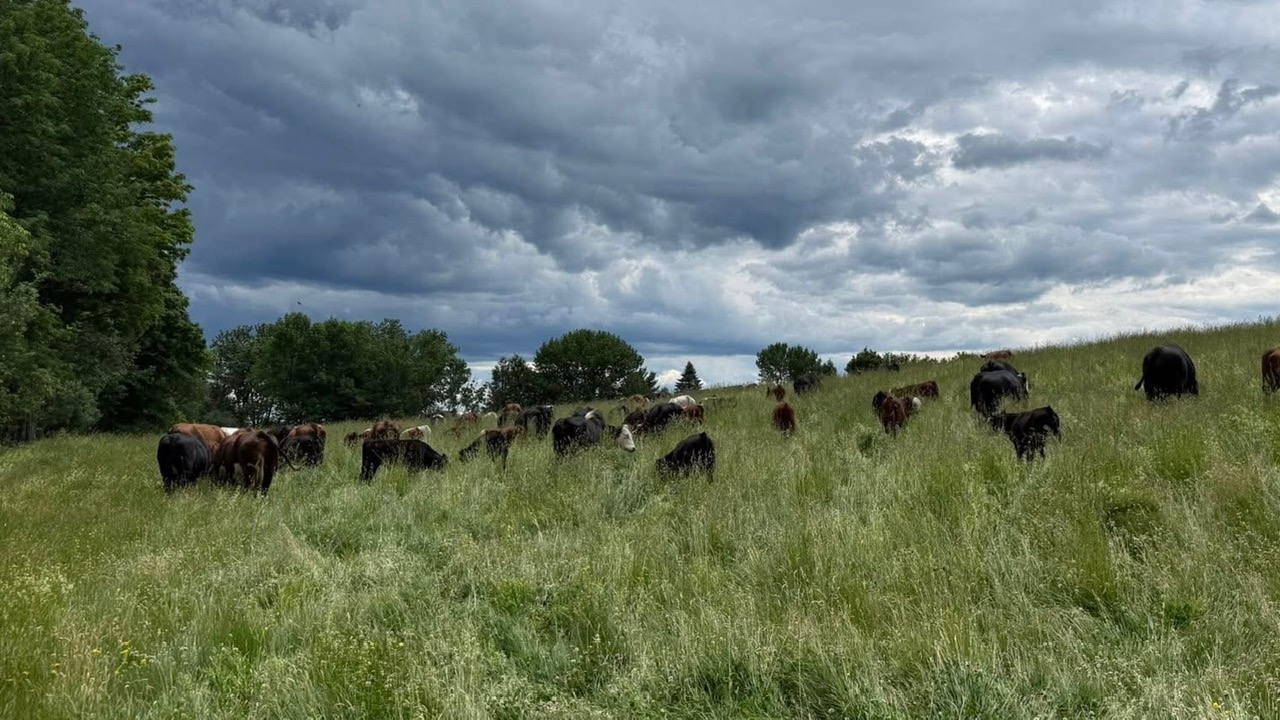
Where a local farmer shows what humane, local meat really looks like
Just down the road from the VTSU butchery lab is Poulin & Daughters Family Farm — one of the region’s fastest-growing and most consistent suppliers of locally finished beef. If Reed’s program represents Vermont’s attempt to build a future workforce, Justin Poulin represents the reality of the farmers who need that workforce now. His whole family is involved in the work — tending their 70-head Hereford and Angus herd selected for temperament and hardiness, moving the animals between pastures through the grazing season and bringing them home for the winter, a steady rhythm of care that keeps both the land and the animals thriving.
“On our farm, every animal’s an individual,” he told me. Their focus isn’t on industrial uniformity but on raising animals in a way that aligns with their values: healthy, sustainable, and local. “We want to give that animal the best care, the best life, the most humane life that we can offer it while it’s here before it becomes your dinner.”
That philosophy shapes every decision they make, especially around slaughter. For Justin, the humane treatment of an animal in its final hours is non-negotiable. He explained why he uses Royal Butcher, just 30 seconds up the road: “We time it so [the butchers] get back from lunch, they call us, they say they’re ready… and within five minutes that animal is dispatched.” No long trailer rides. No hours in a holding pen. “We’re trying to make the last moments of its life as least impactful as possible — not only out of respect, but also quality.”
It’s a reminder that the conversation about Vermont’s meat system isn’t just about workforce pipelines or processing capacity. It’s about the farmers who are already doing the work; the ones raising animals with care, navigating tight processing schedules, and trying to grow responsibly without compromising their values. Justin knows all about the challenges, scheduling slaughter dates a year in advance, balancing demand with herd size, and managing the physical and emotional labor of the work. But he’s equally clear about why he does it.
"We push the local, healthy, humane aspect because that’s what matters to us, and to our customers.”
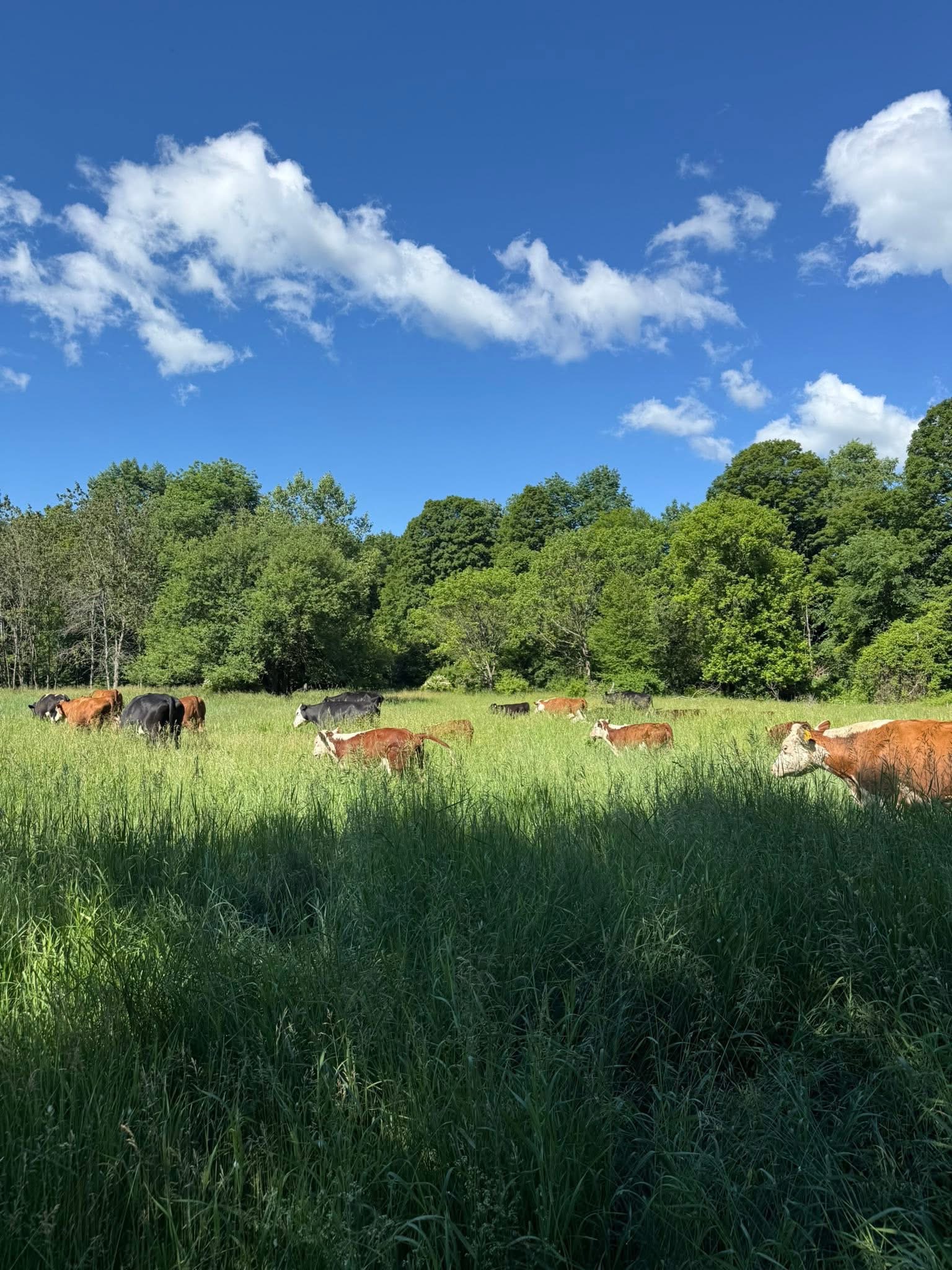 Justin’s voice also adds a grounded perspective to the conversation about the butchery certificate program. He never critiques it directly, but his words point to what farmers actually need: people who can work with the same precision and calm he depends on every time he brings an animal to Royal Butcher. When he talks about timing the drop-off so the animal is dispatched within minutes, or about making the last moments “as least impactful as possible,” he’s describing skills that come from repetition, mentorship, and being in the room — not just from coursework.
His emphasis on timing, handling, and the realities of the work makes the gap between classroom learning and real-world butchering feel tangible. He doesn’t have to say the program might struggle as it’s currently structured; his lived experience says it for him.
Justin’s farm makes the stakes of this moment visible. Vermont can build programs, invest in training, and talk about workforce pipelines, but the real test is whether those efforts reach the people doing the work today. Farmers like Justin aren’t asking for perfection, just a system that keeps pace with their commitment to humane, local food. And that will only happen if everyone stays at the table.
The conversations, the partnerships, the problem-solving, none of it can stall now. There is too much riding on this, too much at stake for Vermont’s farmers, processors, and communities to lose. In every sense, there’s more than meat on the line - there's a university at stake too.
The MeatCraft Butcher Program at VTSU-Randolph
The MeatCraft Butcher Program is a three-level, stackable training pathway that builds skilled, safety-minded meat professionals from the ground up. Students progress from the Apprentice certificate, where they learn meat science, sanitation, HACCP, and basic beef, pork, lamb, and poultry fabrication, to the Artisan level, which adds advanced beef work, sausage making, marketing, and culinary techniques.
The Master level deepens expertise in humane harvesting, product development, and HACCP application, and includes a hands-on abattoir internship. Graduates leave with the technical skills, ethical grounding, and industry awareness needed to enter or advance in Vermont’s meat processing sector.
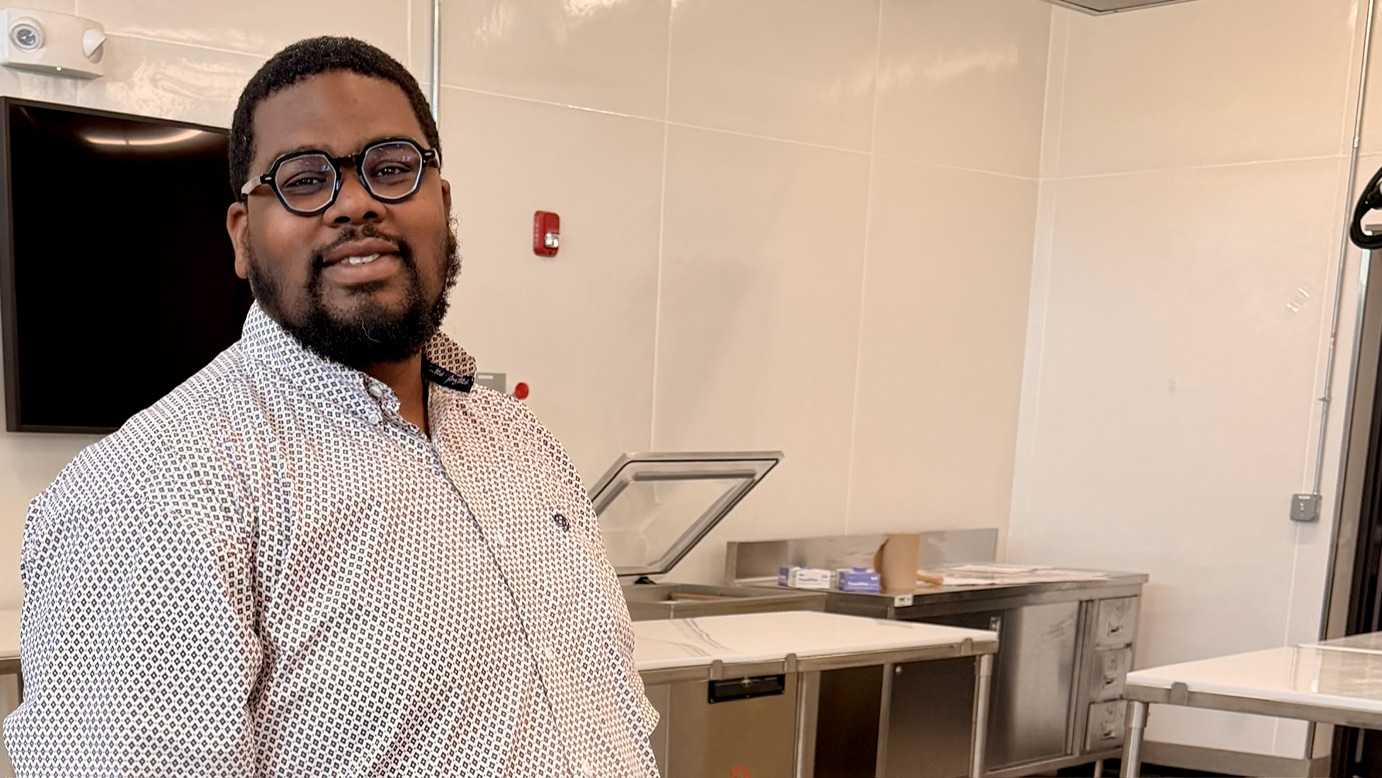
(Dr. DeMetris Reed, Jr., inside the training facility)