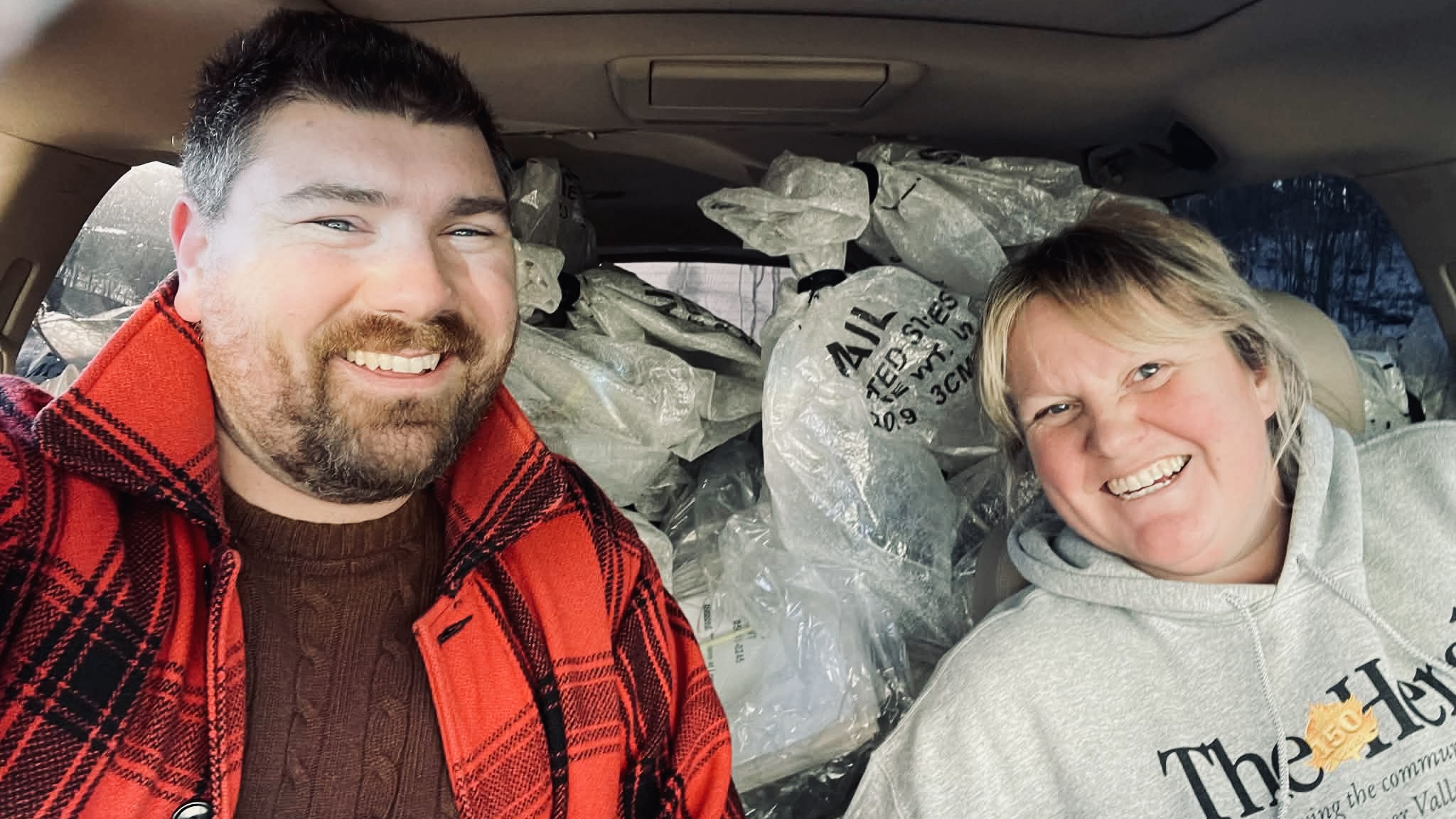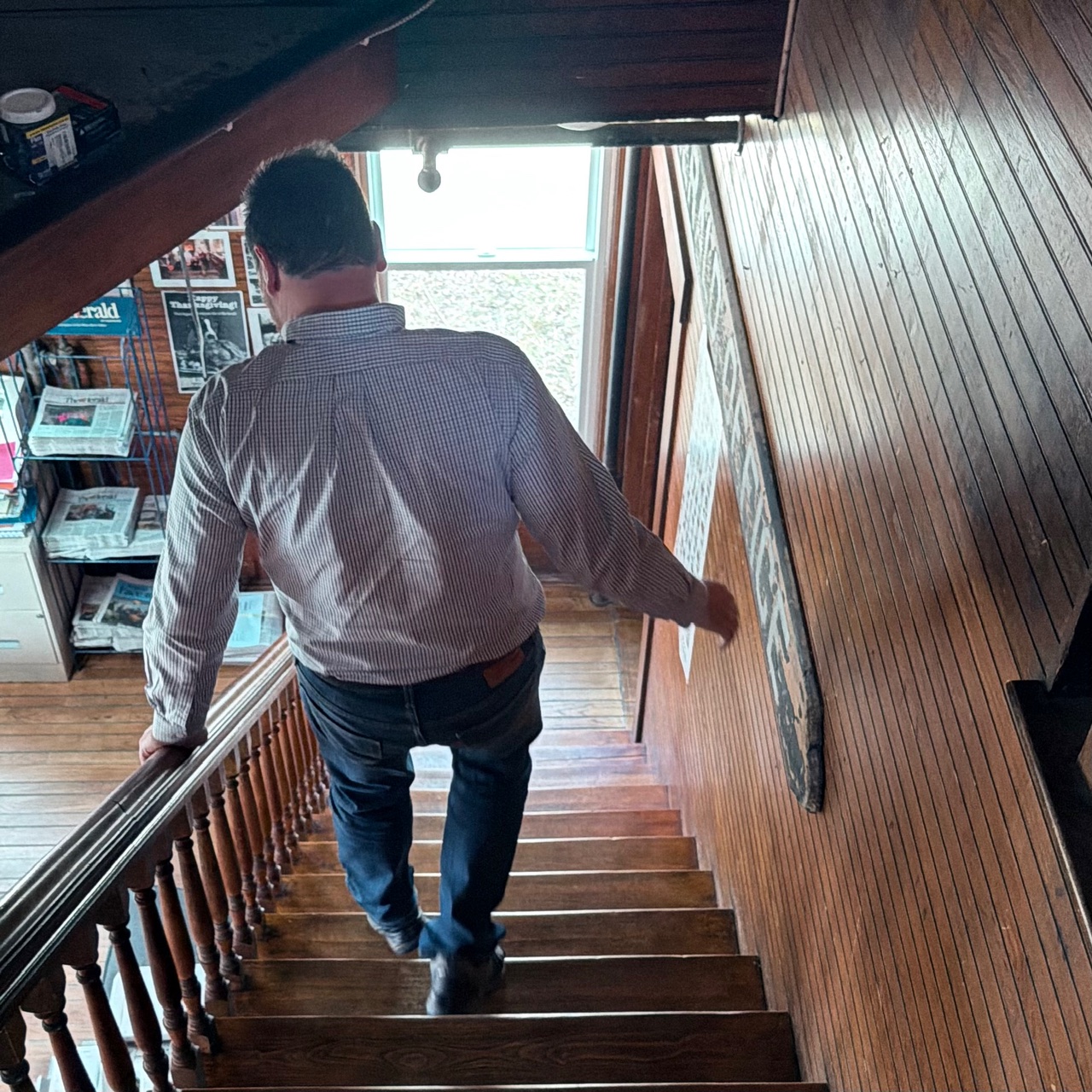
Tim Calabro doesn't think of himself as important. That's the first thing you need to know. He laughs off praise, shrugs at compliments, and treats his work as if it's simply what anyone would do. But it isn't. Tim holds one of the most essential roles in any community — he is the person who tells our story.
He writes articles, edits the correspondents from all sixteen towns the Herald represents, and somehow carries those towns in his head — literally. During our interview, he listed every one of them from memory, in alphabetical order, without hesitation. In that moment, I knew this conversation was going to be something special.
Becky McMeekin told me something that clarified what I was already sensing. Becky, the retired executive director of the Chandler Center for the Arts, said he's one of those rare people who treats everyone with the same level of dignity and respect — not because he says he does, but because he actually does. It's an ethic that's almost invisible unless you're paying attention, and it runs through everything he touches.
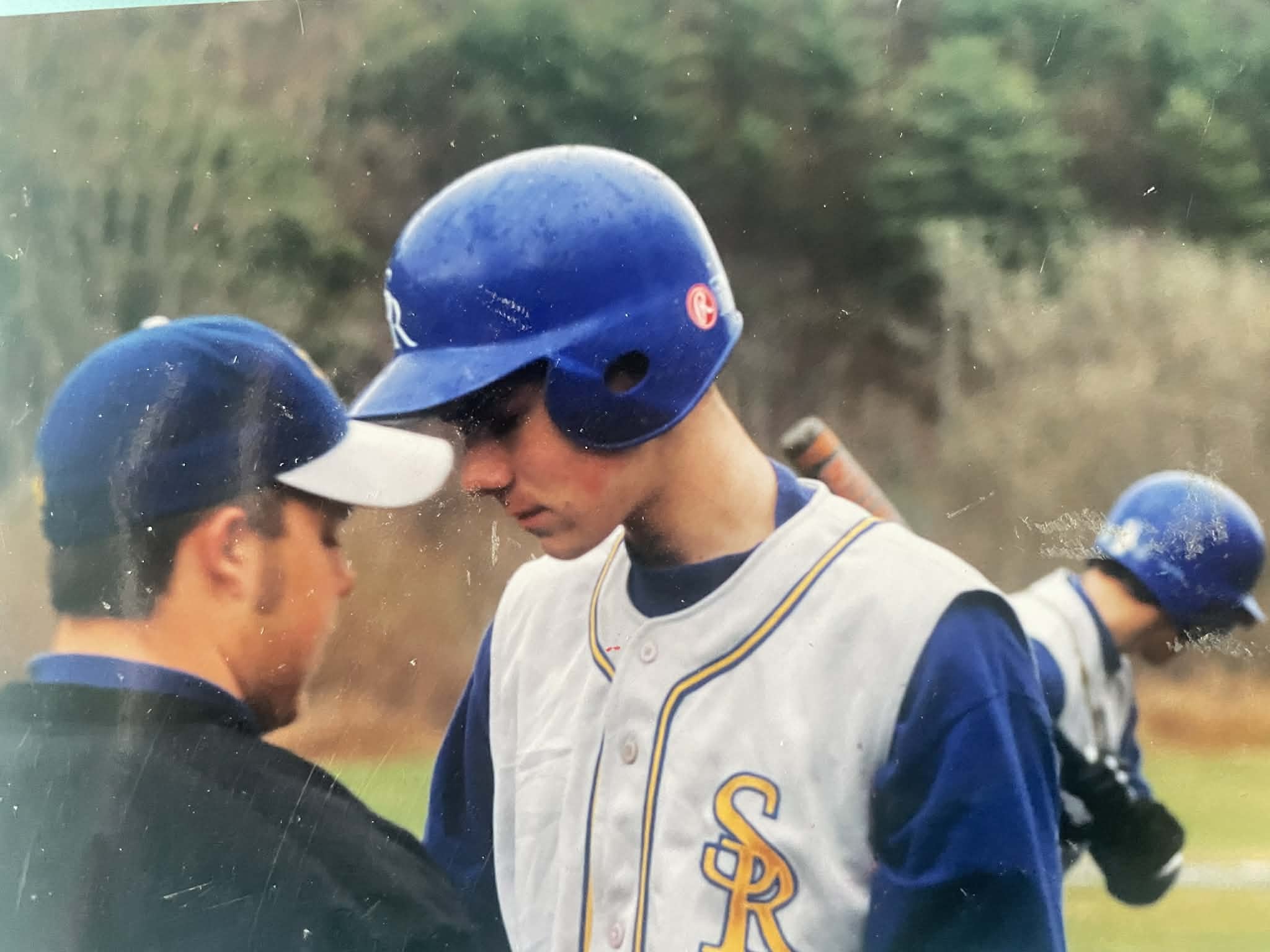
For the Randolph Vibe's 100th interview, I wanted to celebrate someone who doesn't just live here — he documents us, week after week, with clarity, humility, mistakes, and a kind of emotional restraint that lets the truth rise on its own. He thinks I'm silly for choosing him. But that humility is part of what makes him so indispensable.
We talked for almost three hours, and I loved hearing insights from the kind, self-effacing local journalist, photographer, husband, and lifelong observer of the world around him.
A life shaped by images, mentors, and turning points
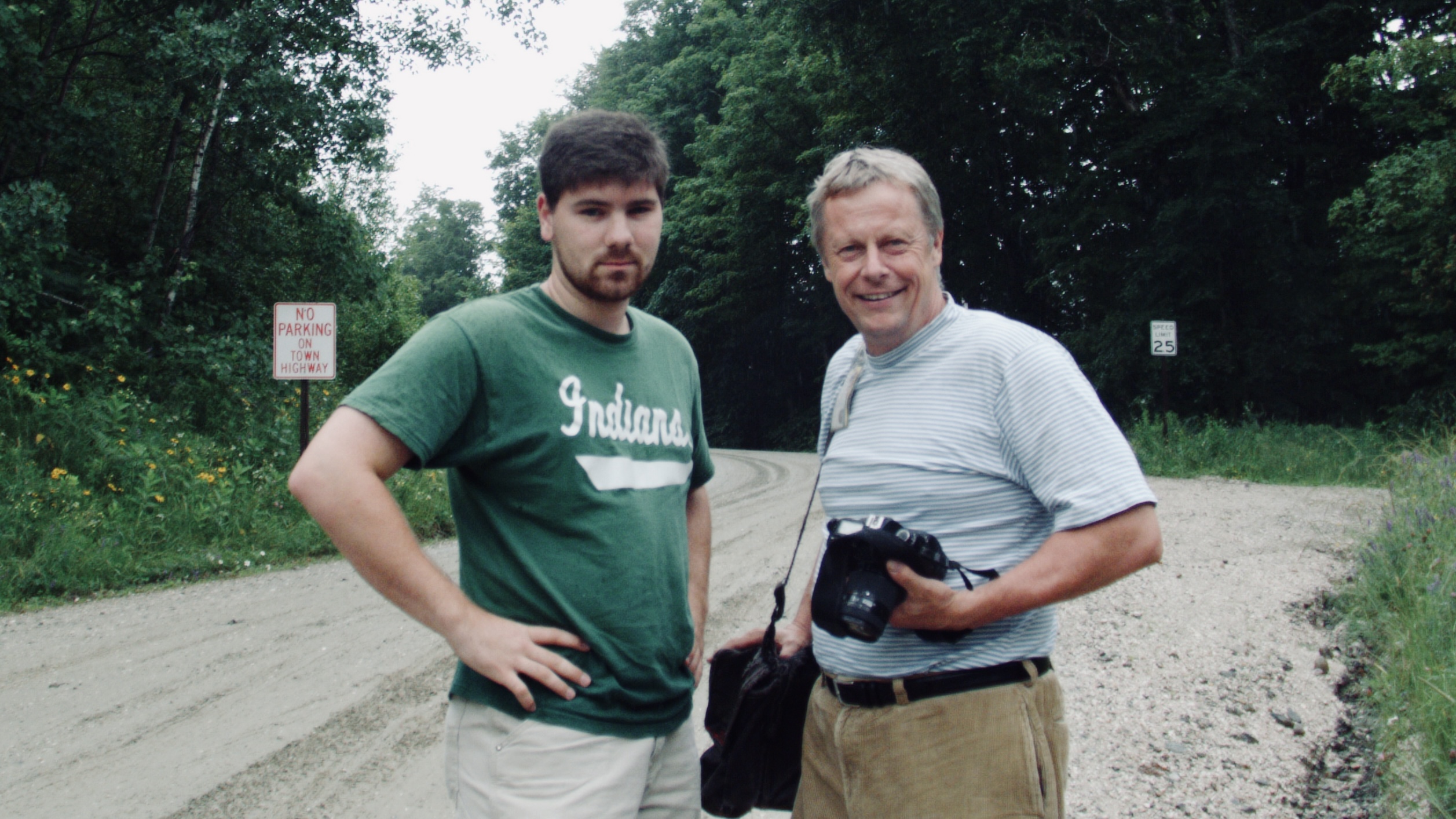
Tim Calabro's journey into photography began just before his 18th birthday in 2000, when he was a high school senior interning under photographer Bob Eddy. Bob told me he recognized Tim's gifts almost immediately. "Absolutely brilliant," he said. "There was nothing he couldn't do." From someone who helped define the paper's visual language, that praise comes with history behind it. Bob talked about the long photographic tradition Tim stepped into — the Drysdales, the Hardings, the Eatons — a line of people who believed a newspaper should "embrace the whole spectrum of life in a community," and that good photography was one way to do it.
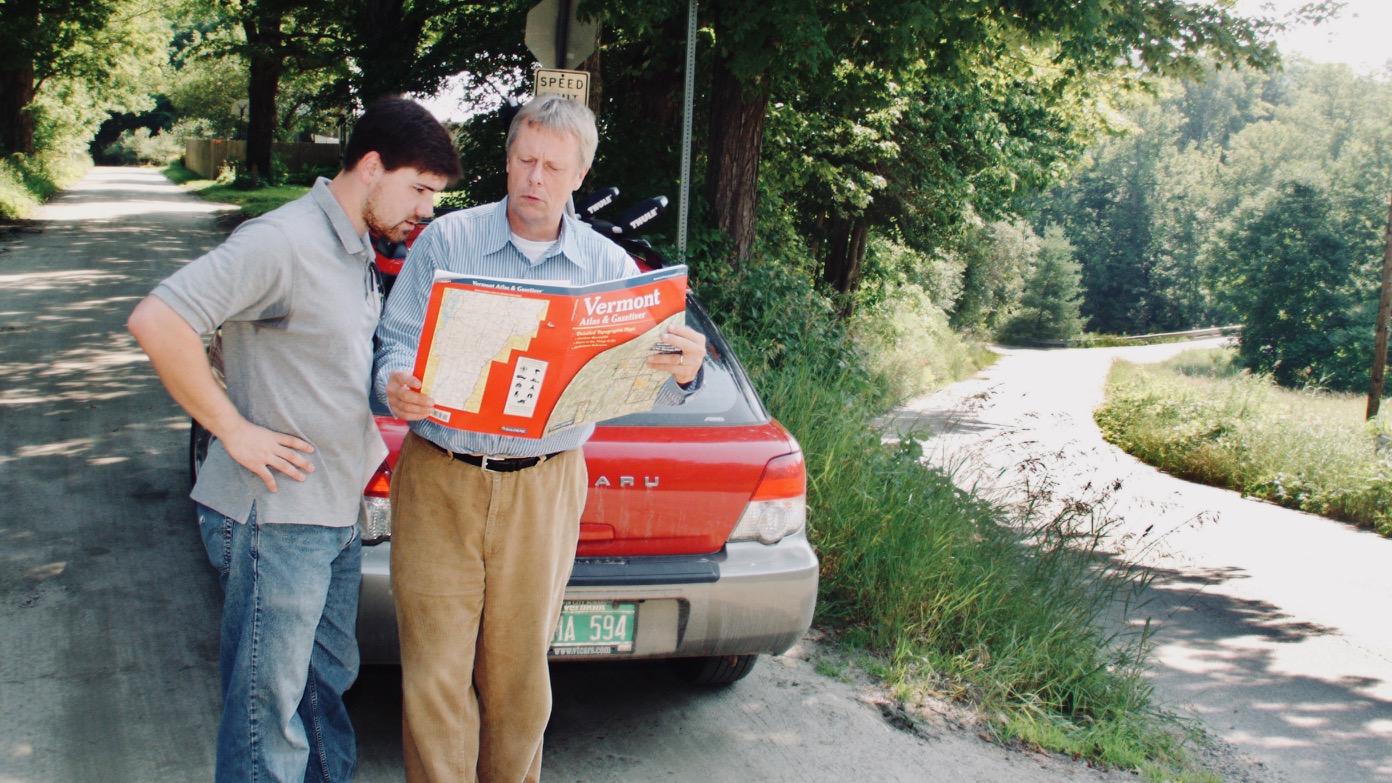
Bob's mentorship left a lasting mark on Tim, who recalls, "When there wasn't an assignment, we'd just drive around and look for things… and I got really good at that." Both Tim and Bob mentioned those drives without knowing the other had said it — the wandering, the looking, the practice of paying attention. It's still visible in Tim's work today.
As we were talking, Tim suddenly stood up, left the room, and returned carrying one of the large black bound volumes of old Herald newspapers — the kind that hold years of community life between their covers. He set it on the table with a soft thud, opened it to a page he wanted to show me, then disappeared again to retrieve another. Each time he returned with a new volume, it felt like he was letting me step a little further into the history he now stewards.
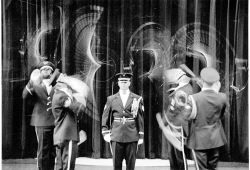
One of Tim's earliest published photos was a slow-shutter shot capturing the USAF Honor Guard Drill Team from the Air Force Academy in Colorado Springs, taken at South Royalton High School. The rifles spun in white blurs behind the soldiers, a visual effect Tim achieved with a slow shutter speed. "Those are the rifles spinning," he said, smiling. "The blur makes the picture." This image marked the start of a life spent watching closely and capturing moments with care.
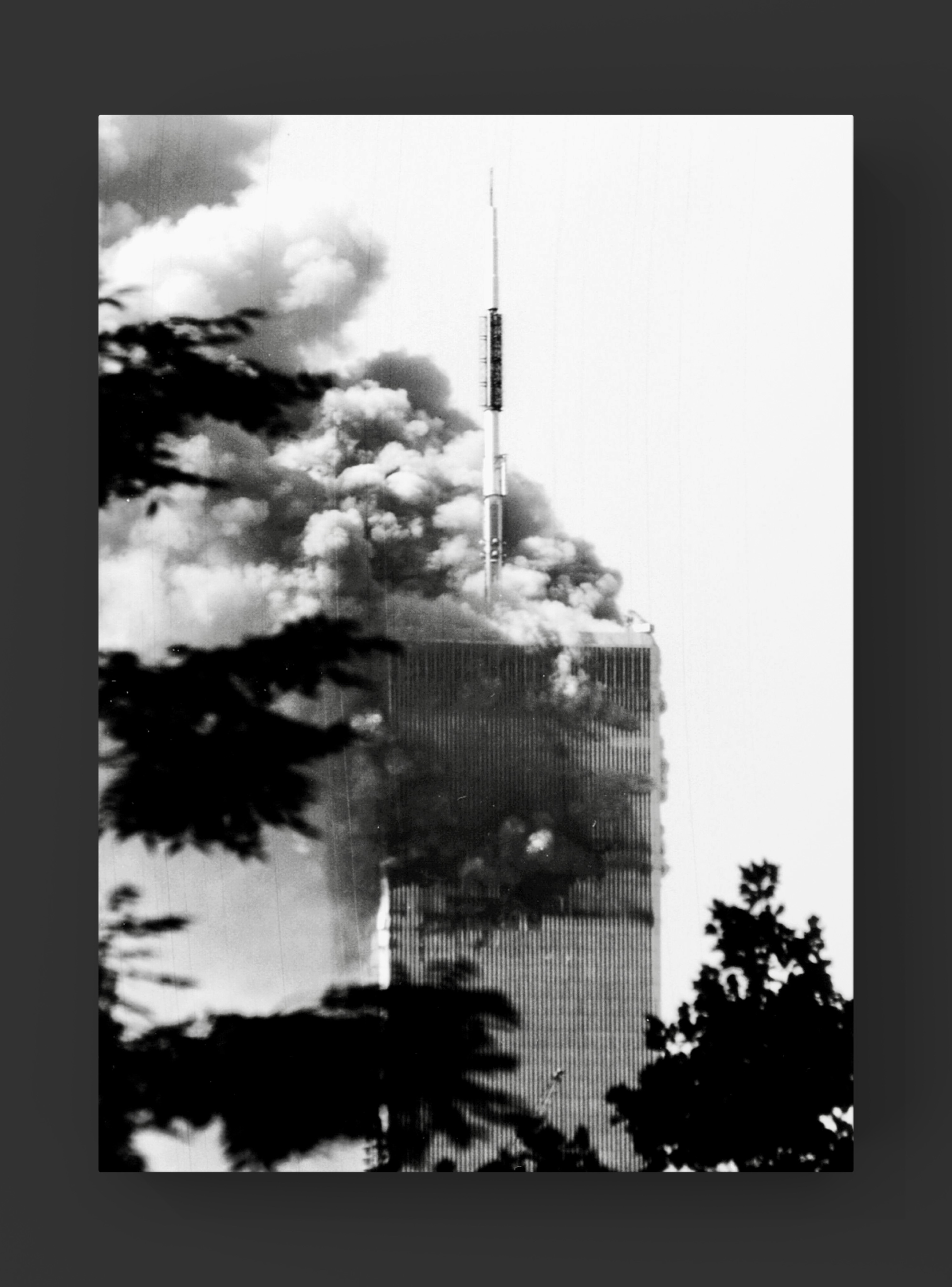
At 18, Tim witnessed a moment that would shape his perspective forever. "We heard this whistling outside that sounded exactly like when Wile E. Coyote falls off a cliff," he said. "We saw the plane fly by our window." Grabbing his camera, he stepped outside. "Someone told me a second plane just hit the other tower… that was the moment it was clear it wasn't an accident." The photo he took that morning is stark and devastating.
Bob remembered that photograph too. "We had it on the page the next day," he told me. "The tower coming down was the metaphor — and he photographed it." It wasn't spectacle for Tim. It was witnessing.
After nearly two years at NYU, where he studied Spanish and played baseball while carrying a camera everywhere, Tim reached a turning point. New York was exhilarating but expensive and overwhelming. "I discovered that I can't afford to stay in New York. College there was really expensive. Honestly, I was a little burnt out on school."
The power of love
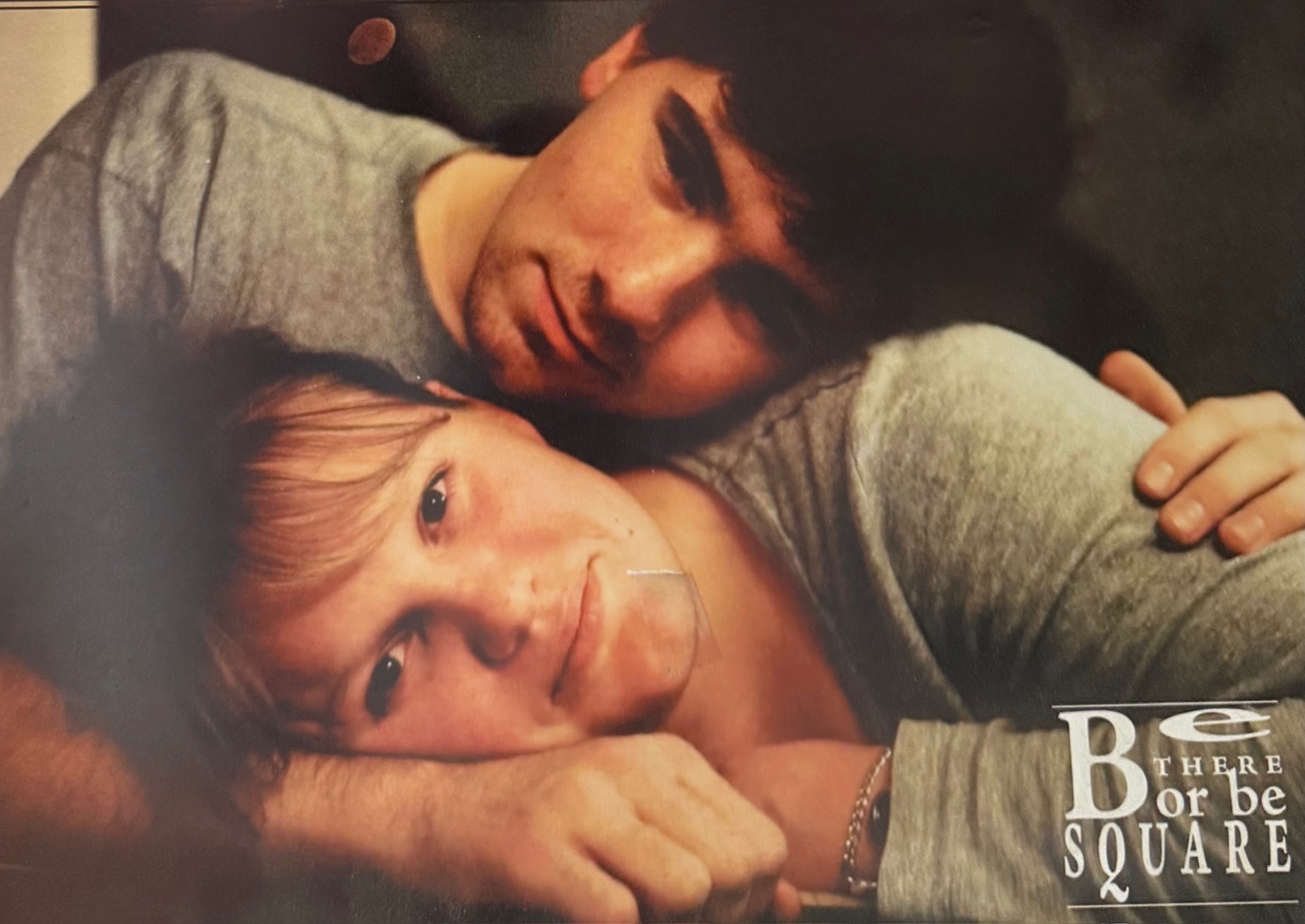
More importantly, there was Katie. They had started dating when he was a junior and she was a senior at South Royalton High School, now White River Valley High School. Having already endured long-distance once, they didn't want to spend the rest of college apart. "Because Katie had gone to UVM," he explained, "we were ready to start our life together [in Vermont]."
Tim left NYU, came home for a semester, then transferred to UVM. They spent that year together in Burlington — she finishing her degree, he finishing his coursework. When she graduated, Tim returned to Randolph and began working at The Herald.
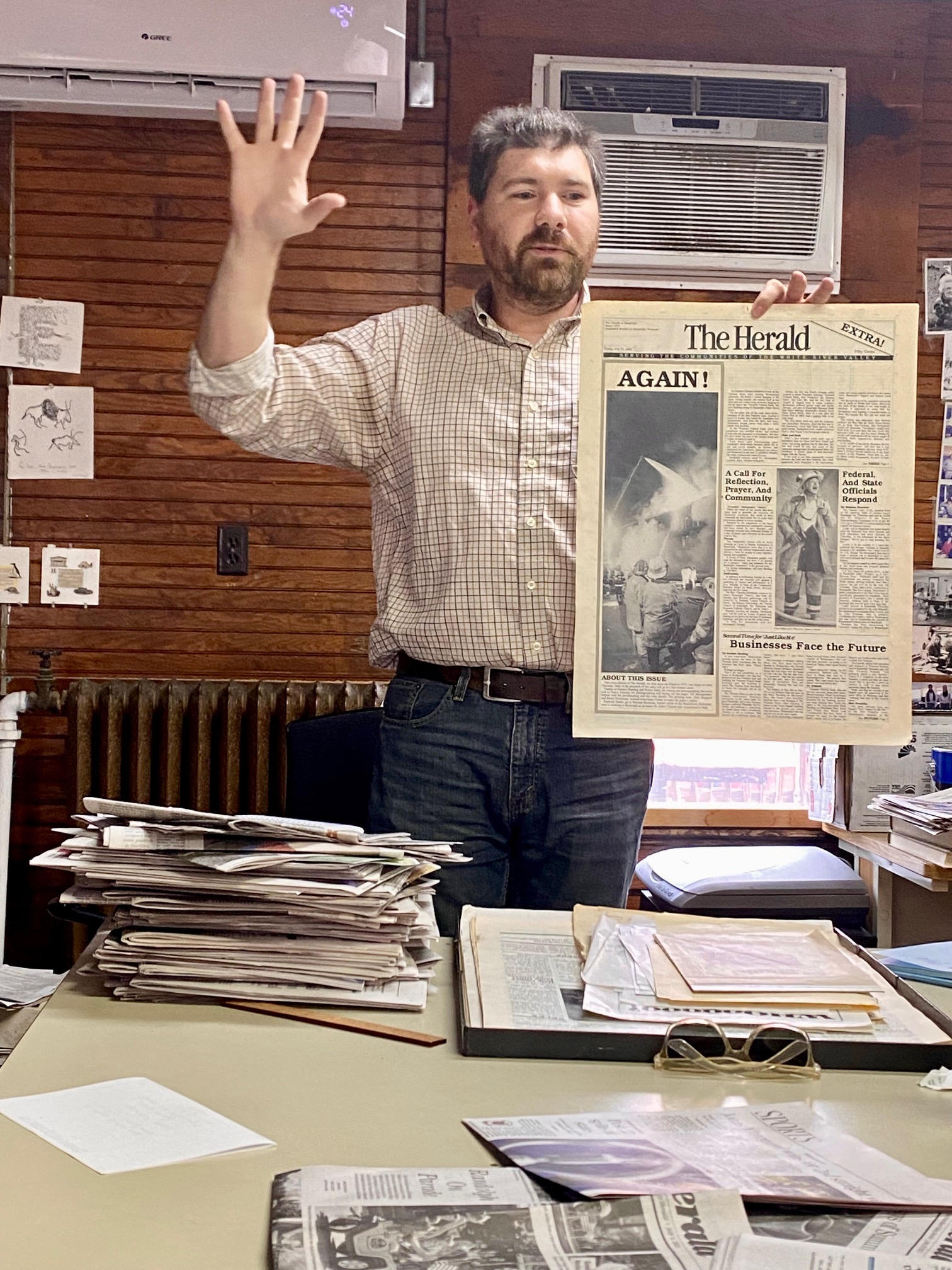
Back home, Tim pieced together photography work at The Herald, Bob Eddy's studio, and the Rutland Herald and Times Argus, often working 60 to 80 hours a week. And through all of it, Katie showed up in the gentle, steady ways that reveal the shape of a life shared. On production mornings, she still gets up at 3:00 a.m. to pick up the papers and deliver them, a detail he mentioned without ceremony, as if it were simply part of the rhythm they've built together.
Becky laughed when she told me, "Katie scored a good one." But she meant it. She'd watched Tim show up for this community for decades — steadily, reliably, without ever making anyone feel like they were intruding on his time.
He learned the craft the old-fashioned way: in darkrooms, newsrooms, car rides with Bob, and late-night edits with Dickey Drysdale. He learned how to read a town and how to listen. He also learned the rhythm of community news — the quiet weeks, the chaotic ones, the stories that surprise you, break your heart, or seem small but reveal something essential about the place you live. Slowly, without trying, he became part of the current that carries Randolph forward — the person who notices, documents, and remembers.
After he returned to Randolph for good, Tim had grown into someone who knew the paper from the inside out — first as a photographer, then as a writer, then as the person who understood how the whole operation held together. When Dickey Drysdale began meeting with potential buyers, Tim couldn't picture himself working for any of them. "I couldn't see myself at the Rutland Herald or the Valley News," he told me. So he went to lunch with Dickey, talked through what it would mean, and in June of 2015 — at thirty-two — he and Katie bought The Herald. It wasn't a dramatic career leap so much as an acknowledgment of something already true: he was the one who understood the paper, the one who cared about it, the one who could carry it forward.
The work that holds us together
After nearly three hours with Tim, what stayed with me wasn't a single story or quote. It was the way he pays attention — steady, consistent, and never inserting himself. Jessamyn West, a prominent local writer and longtime community volunteer, described it in a way that felt exactly right. "Tim is so intellectually curious not just about what's happening in town right now, but everything that has ever happened here," she told me. "He listens to people, gathers their stories, and somehow turns ordinary conversations into narratives that tell the story of an entire community." And she added, "He has this superpower of taking contentious issues and talking about them without picking a side, and he passes that approach on to his staff."
You can feel his influence in every section of the paper — no sensationalism, no cheap framing, just journalism that trusts the reader. In a small town, that trust is its own kind of service.
One of the first things Tim teaches new correspondents is simple: you will make mistakes, and that's okay. "We always acknowledge them," he told me. "We don't wait. We don't delay. We publish the criticism." It isn't performative humility — it's the backbone of how he believes a community paper should operate.
Becky also noted how "apolitical" he is — not in the sense of being disengaged, but in the sense of creating space for others. "You think you know what he's feeling," she said, "but he never gives it away. And everybody feels safe expressing what they feel."
And then there's the way he sees people. "He sees through a photographer's lens," Becky told me. "You really have to notice and appreciate to see the way he does. And he does that with people."
It made me grateful — for him, for our town, for the stories that hold us together. He understands that the truth of a town is often found in the small, unguarded details. Thanks, Tim!